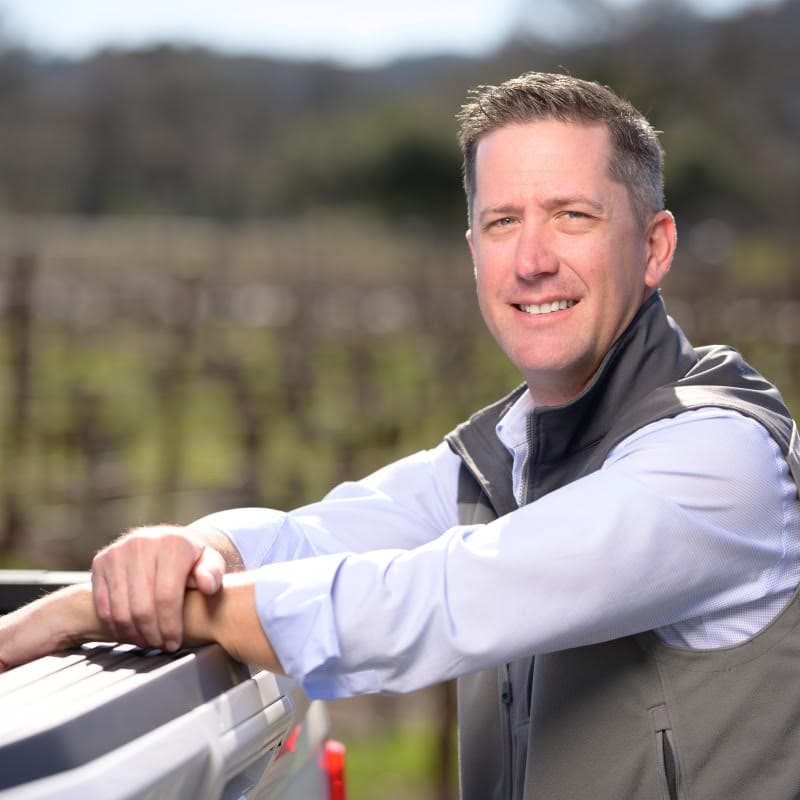
Rob Sorenson
Director of North Coast Estate Vineyards
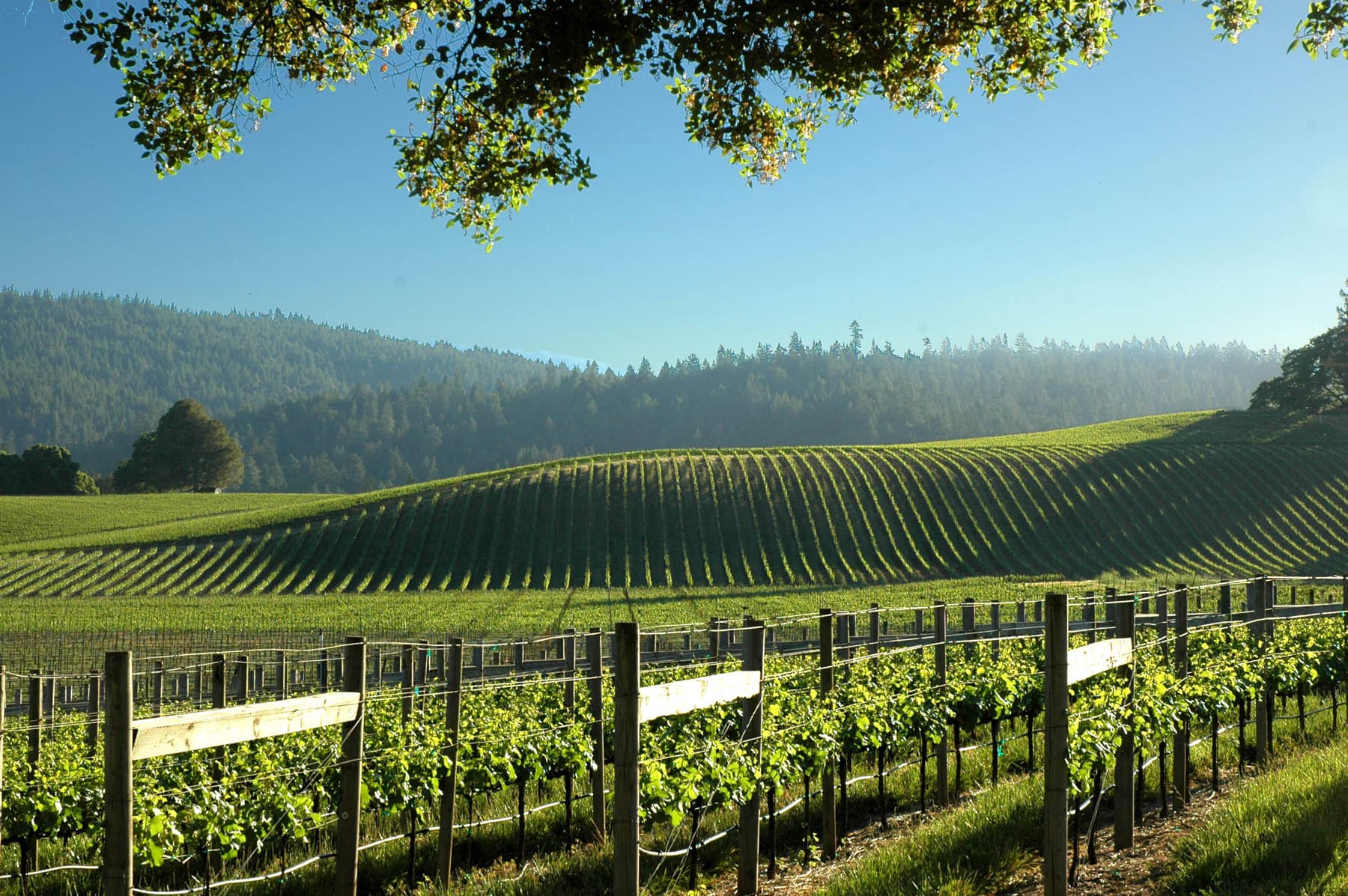
This conversation takes place at Stout Vineyard on Howell Mountain, one of the estate's highest-elevation sites.
Rob Sorenson oversees a far-reaching estate portfolio—mountain Cabernet, benchmark Merlot, and cool-climate Pinot Noir and Chardonnay—built on one conviction: the character of the wine is decided long before the cellar.
Q&A with Rob Sorenson
I oversee our North Coast estate vineyards, nineteen sites totaling roughly 650 acres, stretching from Carneros in the south up through Mendocino and Anderson Valley. It's about a 100-mile span, so no two days ever look the same. During peak periods, especially harvest, we can have close to 200 people working across that footprint at once. My role is making sure all of those vineyards, teams, and timelines stay aligned, while still farming each site for its individual character.
A high-elevation site like Stout really expands what the portfolio can express. This is true mountain fruit. We're standing close to 2,000 feet above the valley floor, and you can feel right away that it's a different environment up here. At times the vineyard sits above the fog line, with that inversion layer changing how the vines experience heat and light. Ripening happens on a different clock. It's usually the last place we harvest across the portfolio, and that extended hang time shows up in the fruit. What it gives us is a classic mountain profile, smaller berries, concentrated flavors, natural structure, and real depth. Sites like this bring tension and character. You can't manufacture that. It comes from elevation, exposure, and the patience of farming in a tougher place.
You can have fog in the valley and sun up here. Temperatures behave differently, so ripening can be surprisingly consistent without the same frost concerns you might expect at elevation. It's long, extended maturation as the season cools, and the vines respond in a way that shows up in the wine's intensity and shape.
When I walk a vineyard, I'm really just trying to understand how the site wants to behave. It always starts with the soil. I'm a geography nerd at heart, so I'm looking at soil type, depth and texture first, then slope, row orientation, and sun exposure. Those basics tell you almost everything—how vigorous the vines want to be, where the heat loads up, how water moves through the profile, and how ripening is going to unfold. As we walk, you can feel the changes. A slight shift in slope or aspect suddenly means different canopy growth, different stress levels, different timing. That variability shows up in shoot growth, cluster development, and ultimately harvest decisions. My job is to read those patterns and manage them accordingly.
We're often too quick to pull vineyards in this industry. If a block is still producing the tonnage we need, and it's healthy enough to farm well, there's a strong argument to keep it. Vines can go far longer than the depreciation logic we tend to default to. Stewardship means salvaging what can be saved and replanting only when the evidence is real.
Sustainability gets talked about a lot, but for us it's very hands-on and very real. Sometimes it starts with something as basic as erosion control. We'll plant cover crops to build roots and soil structure, then layer organic material on top so heavy rains don't cut channels through the rows. If you don't protect your soil, you're not protecting the future of the vineyard. Ten years down the road, that neglect shows up in compaction, lost topsoil, and blocks that are very different from when they were planted. Stewardship isn't theoretical, it's the daily decisions that keep these vineyards viable for the long haul.
Labor is probably one of the biggest realities in modern viticulture. Everything comes back to people. Internally, we've also shifted how we think about our crews. Our full-time farm team isn't treated like seasonal labor anymore. They have benefits, stability, and a real sense of belonging. We also rely on programs like H-2A to help secure consistent, skilled labor, which is essential in an industry where timing and execution make all the difference. And that matters, because vineyard quality is directly tied to the people doing the work. When folks feel valued and supported, it shows up in the rows every day.
Technology is advancing quickly in vineyards, but where I really see AI helping is in capturing the detail we just can't see or process on our own. Vineyards generate massive amounts of information—missing vines, canopy health, variability row by row—and humans aren't built to track all of that efficiently. Now we've got cameras on tractors collecting images while we're already doing the work, and over time that starts to build a real dataset of what's actually happening in the field. That's where the promise is: better decisions, faster. But the tools are only part of it. The real value is in the database behind them. AI is only as good as what you feed it, and we're still early in building that foundation.
At the end of the day, it's still the people. You can talk about technology all you want, but what stays stubbornly human is the energy of the crew. How people show up in the morning, how they work together, and how they leave at the end of the day—that's part of vineyard quality. You can't automate care, pride, or consistency. Those are human inputs. And they absolutely show up in the finished wines!